 Written by
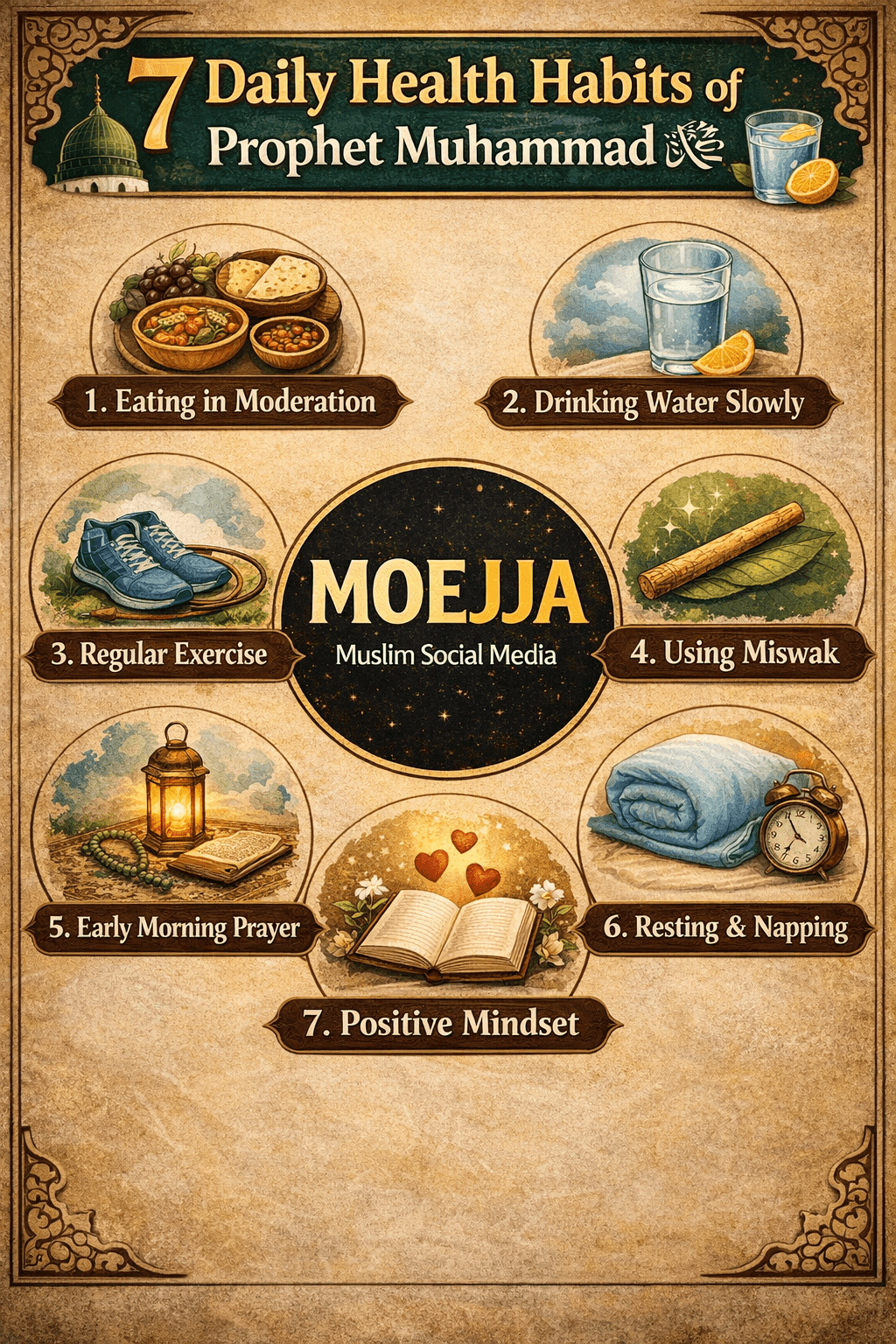
 7 Daily Health Habits of Prophet Muhammad ﷺ — And What Modern Science Says
No extreme regimens, no expensive supplements — just seven simple daily habits that modern research keeps circling back to.
| Sleep | Waking before Fajr, aligned with natural light |
|---|---|
| Hygiene | Miswak used multiple times daily |
| Eating | One-third food, one-third water, one-third air |
| Hydration | Sitting, in three separate sips |
| Movement | Walking and functional daily activity |
| Fasting | Regular voluntary fasting, Mondays and Thursdays |
Why These Habits Matter
The lifestyle of Prophet Muhammad ﷺ was spiritually grounded but also deeply practical — addressing sleep, digestion, hydration, movement, and mental health long before modern medicine gave these ideas names like circadian rhythm or intermittent fasting. None of it required complicated routines; the power was in small, consistent, intentional actions.
What stands out most is the balance — moderation and consistency rather than extremes, addressing body, mind, and soul as one connected system rather than treating them separately.
1. Early Rising
Waking before sunrise for prayer and reflection aligns with the body’s circadian rhythm — natural light exposure regulates cortisol at healthy levels, increasing alertness rather than grogginess. Early rising is linked to better productivity, emotional stability, and even more balanced hormones, while late nights disrupt melatonin and impair digestion.
Starting the day with purpose — before notifications and deadlines take over — builds momentum for everything that follows. Gradual adjustment, through an earlier bedtime and reduced screen time, makes the shift sustainable.
2. Oral Hygiene
The miswak — a natural teeth-cleaning twig — was used upon waking, before prayer, before reciting Qur’an, and before meeting others, integrating oral care into the rhythm of daily life rather than a once-a-day task. Modern dental research has found natural antibacterial compounds in miswak that fight plaque and strengthen gums.
This lines up with the standard dentists recommend today — brushing at least twice daily — while also carrying a social dimension: clean breath supports confidence and stronger everyday interactions.
3. Moderation in Eating
The guidance to fill one-third of the stomach with food, one-third with water, and leave one-third for air addresses what’s still a major driver of modern digestive trouble — overeating, which stretches the stomach, slows digestion, and spikes blood sugar.
Eating slowly and appreciating what’s available shifts eating from emotional indulgence toward nourishment — a mindset today’s nutrition experts still emphasize through portion control and mindful eating.
4. Mindful Hydration
Drinking water while sitting, in three separate sips, without blowing into the vessel reflects more than etiquette. Sitting shifts the nervous system toward a “rest and digest” state that helps the body absorb fluids more effectively than standing and gulping quickly.
Pausing between sips slows intake and lets the body register hydration properly — drinking too fast can temporarily dilute stomach acid and cause bloating — while avoiding blowing into the vessel reflects an awareness of hygiene well ahead of modern microbiology.
5. Daily Movement
Movement was built into daily life rather than scheduled as a gym session — walking with purpose, trade, and activities like archery and horse riding. Even 30 minutes of brisk walking daily is linked to lower risk of heart disease and diabetes, alongside the mood-lifting effect of endorphins.
The model here is functional fitness, not extremes — walking whenever possible, staying active in daily tasks, and avoiding prolonged inactivity, matched by longevity research showing consistent moderate movement correlates with longer life expectancy.
6. Regular Fasting
Voluntary fasting on Mondays and Thursdays, alongside Ramadan, created a consistent rhythm of metabolic reset. Modern research on intermittent fasting points to improved insulin sensitivity, fat metabolism, and reduced inflammation — the body shifting from burning glucose to burning stored fat.
Beyond the physical, fasting builds discipline and delayed gratification, recalibrating the difference between true hunger and habitual eating — always practiced with moderation rather than extremity.
7. Emotional Wellbeing
Gratitude was a daily practice — linked in psychological research to lower stress hormones, better sleep, and reduced rates of depression and anxiety. Strong social bonds, encouraged through maintaining family ties and visiting the sick, correlate with reduced loneliness and longer life; social isolation today is linked to mortality risk comparable to smoking.
Prayer and reflection functioned as built-in stress management — structured pauses throughout the day, echoing what modern therapy now teaches through mindfulness and cognitive reframing.
The Bottom Line
These seven habits — sleep discipline, hygiene, moderation, mindful hydration, movement, fasting, and emotional balance — form a complete, low-cost wellness system. None require expensive tools or extreme effort; what makes them powerful is consistency and balance, which modern preventive medicine keeps independently confirming.
Frequently Asked Questions
Are these health habits scientifically proven?
Many of these habits align with modern scientific findings, including early rising, intermittent fasting, portion control, and regular physical activity.
Can anyone adopt these habits regardless of religious background?
Yes. These habits promote universal health benefits and can be practiced by anyone seeking balanced living.
Is fasting safe for everyone?
While fasting offers benefits, individuals with medical conditions should consult healthcare professionals before adopting regular fasting routines.
How can I start implementing these habits gradually?
Begin with one habit at a time — such as improving sleep schedule or practicing portion control — then build consistently over weeks.
Why is moderation emphasized so much?
Moderation prevents physical strain, supports long-term sustainability, and reduces the risk of lifestyle-related diseases.
Contact
Available for contract work involving WordPress development, SEO/AEO, and digital marketing.
- LocationKhulna, Bangladesh
- Websitemahadi.moejja.com
- Platformmoejja.com
- WhatsAppMessage on WhatsApp