 Written by
 Honoring Parents in Islam: A Duty Tied to Faith Itself
Right after the command to worship Allah alone comes the command to be good to parents — in Islamic teaching, the two aren’t treated as separate matters.
| Core term | Birr al-Walidayn — righteousness toward parents |
|---|---|
| Placement in scripture | Commanded directly alongside the worship of Allah |
| Limit on obedience | Stops short of anything that requires disobeying Allah |
| After death | Dua, charity, and honoring their commitments continue to benefit them |
| Applies to | All parents — including non-Muslim ones, with kindness still commanded |
Parents as a Divine Blessing
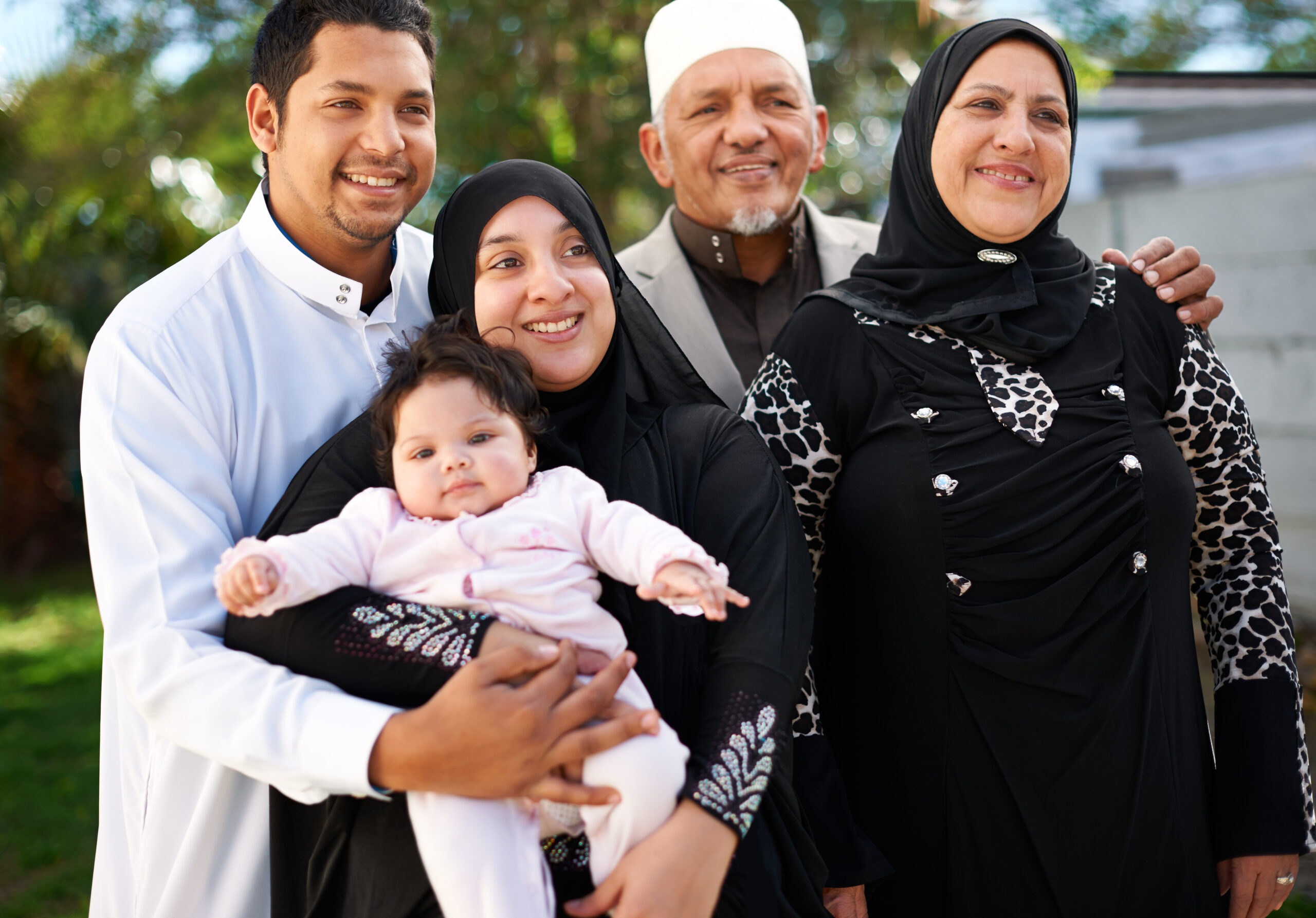
Islamic teaching treats parents as more than caregivers — they’re framed as one of the clearest ways a person experiences mercy in tangible, human form. A Qur’anic verse links gratitude toward parents directly to gratitude toward Allah (31:14), which sets the tone for how seriously this relationship is meant to be taken.
That framing turns ordinary acts — a kind word, patience during a difficult conversation, simply showing up — into something with spiritual weight, not just social courtesy. Neglecting that duty isn’t treated as a private family matter; it’s described as a form of ingratitude that reaches back toward Allah Himself.
What the Quran Teaches About Parents
A well-known verse pairs the command to worship Allah alone directly with the command to treat parents well (17:23) — the sequencing itself is meant to signal how closely the two are linked. The same passage goes further than most people expect, instructing that not even a sound of irritation should be directed at aging parents, only gentle, respectful speech.
Elsewhere, the Quran specifically highlights the physical toll of pregnancy and early motherhood as a reason gratitude is owed (46:15) — not gratitude in the abstract, but through actual service, patience, and preserving their dignity as they age.
What the Prophet Taught About Parents
One of the most repeated hadiths has a companion asking who deserves his best companionship — the Prophet answers “your mother” three times before finally naming the father on the fourth question, a structure meant to underline just how much weight is placed on a mother’s sacrifices specifically. A separate hadith connects Allah’s approval directly to a father’s satisfaction with his child, placing parental pleasure and divine pleasure in close relation to one another.
Another account describes a man carrying his elderly mother on his back during pilgrimage, asking whether he’d finally repaid her — the Prophet’s answer was that he hadn’t, not even for a single moment of pain she endured in childbirth. And when a man wanted to leave his living parents to join a military campaign, the Prophet redirected him: serving them, he said, was itself a form of striving in Allah’s path.
A Mother’s Elevated Status
A well-known hadith places Paradise beneath the feet of mothers — a striking image meant to convey that devotion to her is treated as a genuine pathway to it, not just a nice sentiment. Her sacrifices are described as continuous and largely unseen, which is part of why Islamic teaching gives her precedence even over the father in terms of obedience and care.
This extends even to non-Muslim mothers — a Qur’anic verse specifically addresses a case where a parent pressures a child toward disbelief, and the instruction is still to maintain kindness in worldly matters even while declining that specific request (31:15). Obedience to Allah comes first, but warmth toward a parent isn’t treated as conditional on shared belief.
A Father’s Role: Guardian and Provider
Where a mother’s role centers on nurture, a father’s role is framed around responsibility — a hadith describing every person as a shepherd accountable for those in his care applies directly to how fatherhood is understood. That accountability isn’t just financial; spiritual guidance, honesty, and moral example are treated as equally central to the role.
The Prophet’s own example pushed back against a stricter, more distant model of fatherhood common at the time — he was known for open affection with his grandchildren, treating gentleness as compatible with authority rather than opposed to it. Leadership through mercy rather than fear is the consistent theme, with the father’s calm presence credited with building the kind of household stability the Quran refers to as sakinah.
Birr al-Walidayn: Kindness in Practice
Speak gently
Even in disagreement, tone and word choice are expected to stay soft and respectful.
Serve without hesitation
Small, practical help — errands, meals, physical assistance — carries real weight.
Be patient
Especially as parents age and become more sensitive, forgetful, or set in their ways.
Make dua regularly
A short, specific supplication for their well-being is treated as a meaningful daily habit.
A hadith describing the most beloved deeds to Allah places prayer at its proper time first, and kindness to parents immediately second (Sahih Muslim) — a ranking that puts this duty in genuinely elite company. Birr al-Walidayn isn’t described as contingent on parents being easy to deal with, either; the expectation holds even when they’re difficult, which is arguably the point.
Obedience Has Limits
Obedience to parents is treated as one of the most rewarded acts in Islamic teaching, but it isn’t unconditional — a hadith states plainly that there’s no obedience to any created being that requires disobeying the Creator. If a parent asks for something that conflicts with core religious obligation, the child is expected to decline, but respectfully rather than defiantly.
The example most often cited here is the Prophet Ibrahim addressing his own disbelieving father — firm in his position, but consistently gentle in tone (19:43). The lesson drawn from it is specific: conviction doesn’t require harshness, and disagreement doesn’t have to become estrangement.
Caring for Aging Parents
A Qur’anic verse instructs believers to lower “the wing of humility” toward aging parents — a deliberately tender image, asking for the same patience they once extended during infancy to be returned in their later years (17:24). A blunt hadith reinforces the stakes directly: someone whose parents reach old age in their lifetime and who fails to earn Paradise through serving them is described, repeated three times, as having lost out badly.
In a cultural moment where placing aging parents in outside care is increasingly normalized, this teaching pushes in the opposite direction — not necessarily ruling out all external support, but treating personal presence and patience as the default expectation rather than the exception.
Dua: The Lifelong Thread
The Quran provides a specific, simple prayer for parents — asking for mercy upon them in return for the care they gave during childhood (17:24) — treated as a genuine, ongoing obligation rather than a one-time gesture. This applies while parents are alive and continues after death: charity given in their name, unfinished religious obligations completed on their behalf, and consistent dua for their forgiveness are all described as ways the relationship keeps producing benefit for them.
A hadith frames this specifically as a comfort — a child’s prayer described as capable of raising a deceased parent’s rank, with the parent reportedly told in the hereafter that it happened because their child sought forgiveness on their behalf. It’s a small but genuinely moving idea: love expressed through consistent, ordinary prayer rather than grand gestures.
Modern Challenges, and Teaching It Forward
Modern life pulls in a different direction than this framework assumes — careers, distance, and a cultural emphasis on independence can all make consistent presence with parents genuinely harder to maintain than it once was. None of that erases the underlying obligation, but it does mean intentional planning — scheduled calls, deliberate visits, involving parents in decisions — matters more now than it might have when families simply lived under one roof.
Teaching this to the next generation works less through explicit instruction and more through example — children notice tone and patience more than lectures. Stories from Islamic tradition (Ismail’s obedience to Ibrahim, Yusuf’s enduring love for Yaqub despite years of separation) are commonly used to make the principle concrete rather than abstract for younger kids.
The Weight of Disrespecting Parents
A hadith pairs disobedience to parents with shirk itself when listing the gravest sins — a genuinely serious placement that signals this isn’t treated as an ordinary family conflict. Parental displeasure is described as carrying real weight beyond the relationship itself; a parent’s prayer for or against their child is compared to a prophet’s prayer for or against his own people.
A well-known account describes a devout young man named Alqamah who, on his deathbed, was unable to say the declaration of faith until his estranged mother forgave him — once she did, he was able to speak it and pass peacefully. The lesson drawn from the story isn’t about literal deathbed mechanics; it’s the underlying claim that no amount of formal worship fully substitutes for a parent’s genuine forgiveness.
Frequently Asked Questions
Why are parents given such a high status in Islam?
Because they’re treated as the means through which a person receives life and early guidance, honoring them is framed as an extension of gratitude toward Allah rather than a separate social nicety.
Should I still show respect if my parents aren’t Muslim or don’t practice well?
Yes. Kindness toward parents is commanded regardless of their faith, though obedience stops short of anything that would require disobeying Allah.
How can I honor my parents if we live far apart?
Regular contact, financial or practical support where possible, and consistent dua on their behalf are generally treated as more important than physical proximity itself.
Can I still earn reward by honoring parents after they’ve passed away?
Yes. Praying for them, giving charity in their name, honoring commitments they left unfinished, and maintaining ties with their relatives are all described as ways the relationship continues after death.
What if the relationship with my parents is genuinely strained?
Islamic teaching encourages approaching reconciliation with humility and continued dua, without requiring that every past conflict be resolved before kindness is shown.
The Bottom Line
Across every source this draws from, the message stays consistent: honoring parents isn’t a separate box next to religious devotion, it’s treated as part of the same devotion. That holds whether they’re difficult, aging, far away, or already gone — the obligation just changes shape rather than ending. For anyone looking for a place to start, the practical version is almost embarrassingly simple: call more, complain less, and don’t wait for gratitude to feel easy before showing it.
Contact
Available for contract work involving WordPress development, SEO/AEO, and digital marketing.
- LocationKhulna, Bangladesh
- Websitemahadi.moejja.com
- Platformmoejja.com
- WhatsAppMessage on WhatsApp