 Written by
 Hibatullah Akhundzada: Afghanistan’s Reclusive Supreme Leader
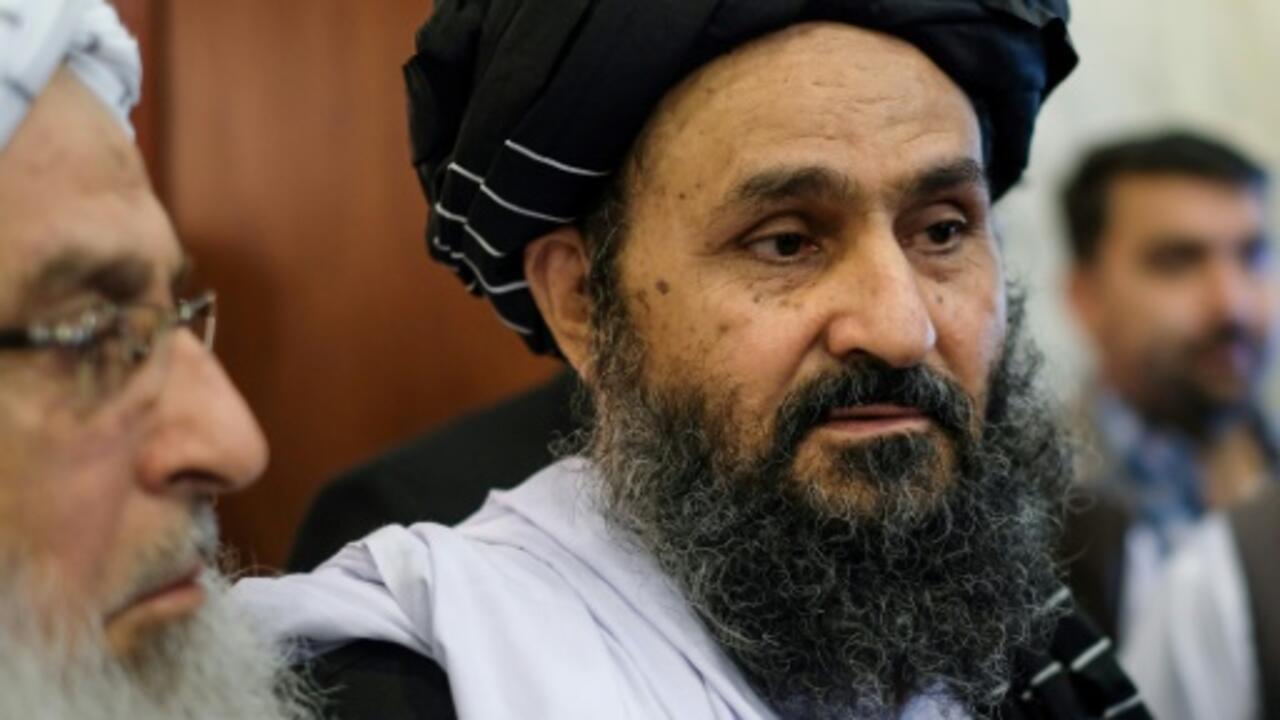
He’s never given a televised interview, rarely leaves Kandahar, and is barely photographed — yet every major decision in Afghanistan runs through him.
| Born | Around 1961, Kandahar Province, Afghanistan |
|---|---|
| Became Supreme Leader | 2016, after Mullah Akhtar Mansour was killed in a US drone strike |
| Base of power | Kandahar — not Kabul, where the executive ministries operate |
| ICC status | Arrest warrant issued in 2025 for crimes against humanity over persecution of women, girls, and LGBT people |
| Girls’ education ban | In effect since 2021, into its fifth year as of 2026 |
| 2026 developments | Open conflict with Pakistan; reported (unconfirmed) assassination attempt; internal Taliban leadership rifts |
Who Is Hibatullah Akhundzada
Akhundzada is a religious scholar from Kandahar Province who became known within Taliban circles for his expertise in Hadith and Islamic jurisprudence rather than for any military role — during the Soviet-Afghan war he functioned as a teacher and jurist rather than a fighter. That scholarly reputation, earning him the title “Sheikh-ul-Hadith,” became the foundation of his authority.
He’s genuinely one of the least visible major world leaders — no televised interviews, extremely rare photographs, communication almost entirely through written decrees and recorded sermons. That reclusiveness is deliberate, and it’s proven to be politically effective: it’s very hard to challenge or even clearly characterize a leader the public can barely see.
His Rise Within the Taliban
During the Taliban’s first period in power (1996–2001), Akhundzada served as a judge in military courts, becoming a close religious advisor to founder Mullah Mohammad Omar. After the 2001 US-led invasion, he relocated to Quetta, Pakistan, where he ran a madrasa and continued shaping the movement’s ideological direction from exile — surviving, notably, while several senior Taliban figures around him were killed in drone strikes over the following years.
Western intelligence assessments largely overlooked him during this period, focused instead on more visible military commanders. Within the Taliban itself, though, he’d become the figure who could legitimize leadership decisions through religious rulings — a quieter but ultimately more durable form of influence than battlefield command.
Becoming Supreme Leader in 2016
Akhundzada was named Supreme Leader in 2016 after Mullah Akhtar Mansour was killed in a US drone strike, chosen largely as a consensus candidate — a scholar without a personal military faction, acceptable to power centers like Sirajuddin Haqqani and Mullah Yaqoob who each commanded real armed strength. His first public statements framed the Taliban’s ongoing insurgency in explicitly religious terms rather than political ones.
Under his leadership, the Taliban balanced continued military pressure with the diplomatic track that eventually produced the 2020 Doha Agreement with the United States — though Akhundzada himself stayed out of direct negotiations, providing religious justification for the process to skeptical hardliners rather than leading it publicly.
How Power Actually Works: Kandahar vs. Kabul
Kandahar decides
Major policy originates from Akhundzada’s Leadership Council, not the Kabul cabinet.
Kabul implements
Ministers manage day-to-day administration but can’t act independently on major policy.
No secular governance
All law and policy must conform to Akhundzada’s interpretation of Sharia — there’s no separate track.
Decrees over debate
Decisions are made in secret by the Leadership Council, with no popular vote or public deliberation involved.
The Restriction of Women’s Rights
This is the defining feature of Akhundzada’s rule, and it deserves direct treatment rather than restating his own justification as though it were a balanced account. Since 2021, girls have been barred from secondary school and university, women excluded from most public-sector work, and travel restricted without a male guardian — a systematic exclusion from public life that international law experts and UN investigators have specifically flagged as a form of gender persecution, not simply a conservative social policy.
In 2025, the International Criminal Court issued an arrest warrant for Akhundzada, charging him with crimes against humanity specifically over the persecution of women, girls, and LGBT people — alongside a similar warrant for the Taliban’s chief justice. As of 2026, the girls’ secondary education ban has now lasted five years, making Afghanistan the only country in the world currently barring girls from education past a certain age. Akhundzada has personally blocked internal proposals from more pragmatic Taliban officials to reverse the policy.
Foreign Relations and Isolation
Akhundzada’s approach to the outside world is built around self-reliance and suspicion of foreign influence, which has left Afghanistan without formal international recognition from any government years into Taliban rule. Relations with China and Russia remain pragmatic and limited to economic and security cooperation; relations with Pakistan, once the Taliban’s most consistent backer, have deteriorated significantly — a trend that would escalate sharply by 2026.
He treats the 2021 US withdrawal as vindication of the Taliban’s approach and has resisted any rapprochement with Washington that doesn’t fully accept the Emirate’s terms — a stance that has kept Afghanistan diplomatically isolated even as its humanitarian and economic situation has worsened.
Economic Crisis Since 2021
The loss of foreign aid — which previously funded a large share of government spending — combined with sanctions and frozen assets has left Afghanistan’s economy in a severe, prolonged crisis. Akhundzada has consistently prioritized ideological consistency over economic pragmatism, resisting reforms that might ease the crisis if they’re seen as compromising religious principles, including the continued exclusion of women from the workforce despite its direct cost to household incomes nationwide.
Millions of Afghans face food insecurity as a direct result. Whatever weight one gives to the stated religious reasoning behind these choices, the practical consequence has been a humanitarian crisis that shows no sign of easing under the current policy framework.
Internal Tensions and the 2026 Pakistan Conflict
Cracks within the Taliban’s own leadership have become harder to obscure heading into 2026 — reports, including a BBC investigation, describe deepening friction between Akhundzada’s hardline circle in Kandahar and more pragmatic ministers in Kabul, with leaked audio reportedly showing Akhundzada himself warning of potential collapse from internal discord. Armed resistance groups, including the National Resistance Front now led by Ahmad Massoud’s son, have sought to exploit that instability.
Separately, tensions with Pakistan escalated into open conflict in early 2026, with Pakistani airstrikes hitting targets inside Afghanistan — including, according to unconfirmed reports, an attempt to strike Akhundzada’s location in Kandahar directly. He appears to have survived: he delivered a lengthy Eid al-Adha sermon in May 2026, calling on armed and political opponents to lay down weapons and accept Taliban rule, suggesting he remains alive and functionally in charge as of mid-2026, even amid the most serious internal and external pressure his leadership has faced.
Frequently Asked Questions
Who is Hibatullah Akhundzada?
He’s the Taliban’s supreme leader and the head of Afghanistan’s Islamic Emirate, a reclusive religious scholar who took the role in 2016 and has ruled from Kandahar since the Taliban retook Afghanistan in 2021.
Has Akhundzada been charged with any crimes internationally?
Yes. The International Criminal Court issued an arrest warrant for him in mid-2025, charging him with crimes against humanity over the persecution of women, girls, and LGBT people.
What is his policy on women’s education and work?
Girls have been barred from secondary school and university since 2021, and women are excluded from most public-sector work and required to travel with a male guardian — restrictions that have now lasted roughly five years with no sign of reversal.
What’s happening between Afghanistan and Pakistan in 2026?
Border tensions escalated sharply in early 2026, with Pakistan declaring open conflict with Taliban authorities and conducting airstrikes inside Afghanistan, reportedly including an attempt to target Akhundzada himself in Kandahar.
Is Akhundzada still alive and in charge?
As of mid-2026, yes — he has continued to appear via audio sermons, including an Eid al-Adha address in May 2026, despite reports of an attempted strike on his location earlier that year.
The Bottom Line
Akhundzada has built one of the most opaque forms of leadership anywhere in the world — governing an entire country almost entirely through decree, from a city most of his own government’s ministers rarely visit. That opacity has protected him politically, but it hasn’t shielded Afghanistan from the consequences of his choices: an ICC arrest warrant, a five-year exclusion of girls from education that stands alone globally, a collapsed economy, and now, in 2026, open conflict with a former ally and visible cracks within his own movement. Whether his particular blend of religious absolutism and strategic patience holds under that pressure is now a genuinely open question.
Contact
Available for contract work involving WordPress development, SEO/AEO, and digital marketing.
- LocationKhulna, Bangladesh
- Websitemahadi.moejja.com
- Platformmoejja.com
- WhatsAppMessage on WhatsApp