 Written by
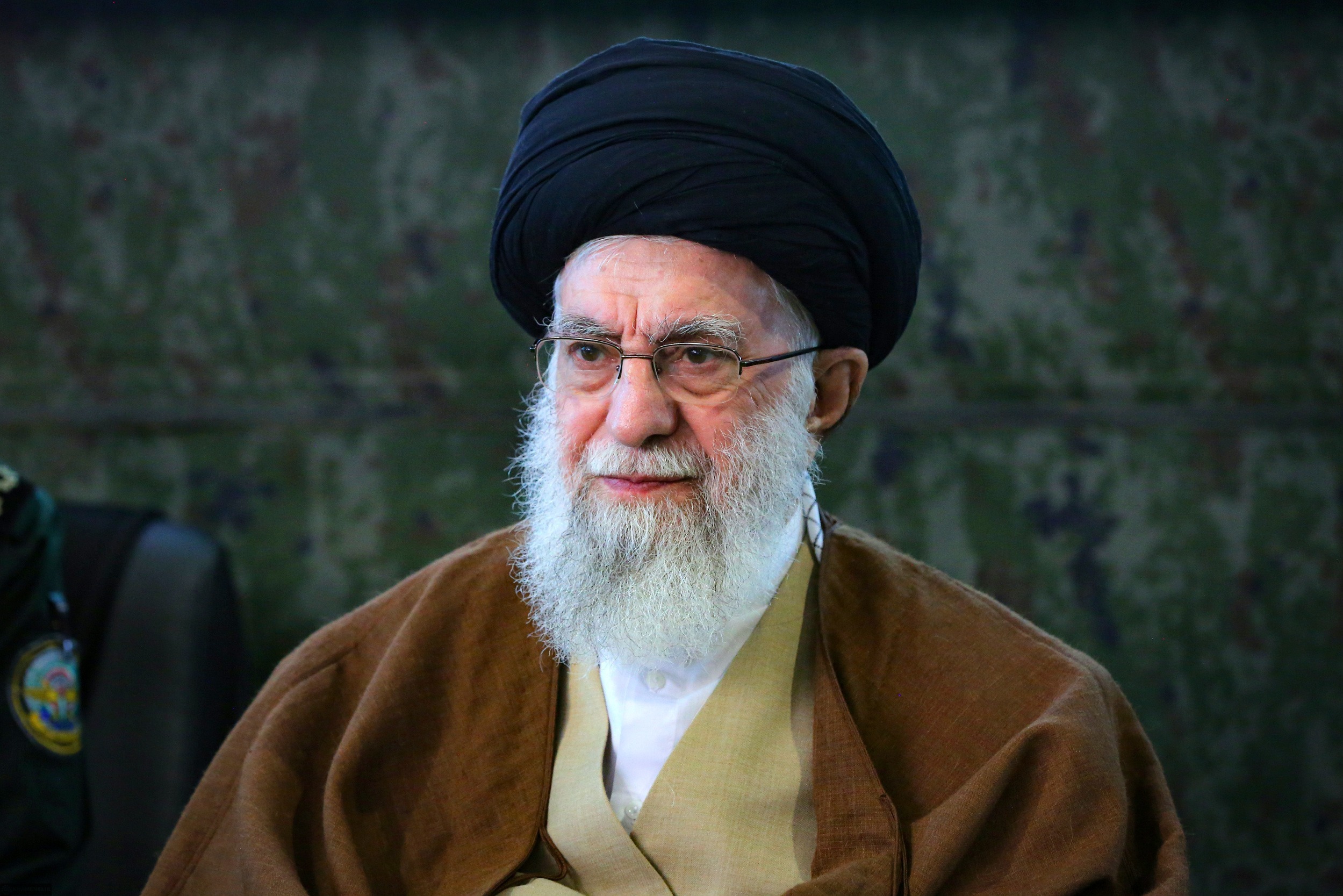
 Ali Khamenei: Iran’s Supreme Leader, His Record, and His Death
For nearly four decades, one man held ultimate authority over Iran. He was killed in early 2026, and what follows is still very much unresolved.
| Lived | July 17, 1939 – February 28, 2026 |
|---|---|
| Supreme Leader | 1989–2026, following Ayatollah Khomeini’s death |
| Also served as | President of Iran, 1981–1989 |
| Human rights record | UN investigators found crimes against humanity in the 2022 crackdown alone; one of the world’s highest execution rates |
| Died | Killed in a joint US-Israeli strike on his Tehran compound, opening a wider war |
| Current status | Son Mojtaba Khamenei named successor; his own condition remains disputed as of mid-2026 |
A Life That Shaped Modern Iran
Born into a clerical family in Mashhad, Khamenei studied under influential teachers including Ayatollah Ruhollah Khomeini, became an outspoken critic of the Shah’s government in the 1960s and 70s, and was repeatedly arrested and imprisoned by the Shah’s secret police for it. He played an active organizing role in the 1979 revolution and became one of Khomeini’s closest allies during the founding of the Islamic Republic.
He served as Iran’s president from 1981 to 1989, then, following Khomeini’s death, was chosen as Supreme Leader by the Assembly of Experts — a somewhat surprising selection at the time, since he wasn’t the most senior cleric in contention. Over the following decades he steadily consolidated the powers of that office, ensuring that no major political, military, or judicial decision in Iran happened without his approval.
Velayat-e Faqih: How Power Actually Worked
Khamenei’s authority rested on Velayat-e Faqih — the doctrine that a qualified Islamic jurist holds ultimate authority over society, above elected officials. In practice, this meant Iran operated as a hybrid system: elections took place, but the Guardian Council (itself answerable to the Supreme Leader) vetted every candidate, filtering out anyone who might genuinely challenge the system’s direction.
Khamenei balanced competing factions — conservatives, reformists, technocrats, and the military — carefully enough to keep himself at the center of Iranian politics for nearly 40 years, while building deep loyalty within the Islamic Revolutionary Guard Corps (IRGC) specifically, ensuring that Iran’s most powerful military and economic institution answered to him rather than to the elected government.
A Four-Decade Record of Suppressing Dissent
This is the part of Khamenei’s record that gets understated in a lot of retrospectives, and it shouldn’t be: nearly every major wave of domestic protest during his rule was met with lethal force. The 2009 Green Movement, following a disputed election, saw security forces kill protesters — the death of Neda Agha-Soltan, captured on video, became an internationally recognized symbol of the crackdown. Nationwide protests over fuel prices in 2019 were met with a similar response; human rights groups estimated hundreds, possibly over a thousand, killed in days, alongside a near-total internet shutdown.
The most consequential was the 2022 “Woman, Life, Freedom” uprising, triggered by the death in custody of Mahsa Amini after her arrest for allegedly violating Iran’s mandatory hijab law. Khamenei publicly denounced the protesters as foreign-orchestrated “rioters” and praised security forces for confronting them; a UN fact-finding mission later concluded Iran’s response — killing more than 500 people, including dozens of children, and detaining tens of thousands — amounted to crimes against humanity. Iran has continued executing people connected to those protests since. Throughout his tenure, Iran maintained one of the highest per-capita execution rates in the world, extending capital punishment well beyond ordinary criminal cases into political charges.
Foreign Policy and the “Axis of Resistance”
“Neither East nor West”
A foreign policy built around resisting both Western liberalism and reliance on any single foreign power.
Regional proxies
Sustained backing for Hezbollah, Hamas, and allied militias in Iraq, Syria, and Yemen.
Pivot to Russia and China
Deepened ties as a hedge against Western sanctions and diplomatic isolation.
Nuclear ambiguity
Iran maintained its program was peaceful; the IAEA and Western governments repeatedly raised proliferation concerns.
Iran’s regional network took a severe hit in 2023–2025: Hamas’s October 2023 attack on Israel triggered a war that devastated Gaza and isolated Hamas, Hezbollah’s leadership was largely eliminated in a 2024 Israeli campaign, and the fall of Bashar al-Assad’s government in Syria in December 2024 removed a key regional ally. By early 2026, the “Axis of Resistance” Khamenei had spent decades building was significantly weaker than at any point in years — a backdrop that mattered directly to what happened next.
The “Resistance Economy” and Its Real Costs
Khamenei’s economic response to sanctions emphasized self-reliance, import substitution, and domestic industry — a policy that did produce genuine gains in some sectors, including defense technology and pharmaceuticals. But it didn’t prevent chronic inflation, currency instability, and widespread corruption from eroding living standards for ordinary Iranians over the following decades, fueling several of the very protests described above.
Khamenei consistently attributed these hardships to mismanagement by officials rather than to structural problems with the system itself — a framing his critics viewed as deflecting responsibility from decisions made at the top, including his own insistence on economic self-isolation even when negotiated relief from sanctions was on the table.
The 2026 Iran War and Khamenei’s Death
On February 28, 2026, Israel and the United States launched a sweeping military campaign against Iran, striking hundreds of targets nationwide including nuclear facilities and senior military and scientific leadership. Khamenei himself was killed in a strike on his Tehran compound, along with his wife, a son, and a brother-in-law, in an attack timed to coincide with a meeting he was holding with top aides — several of whom were killed alongside him. Iranian state media confirmed his death the following day and declared 40 days of mourning.
The strikes killed dozens of senior Iranian officials in total, reportedly including much of the Assembly of Experts leadership responsible for choosing a new Supreme Leader — creating a succession crisis without real precedent, since Iran has only navigated this process once before, in 1989. The attack came, notably, while Iran had been engaged in what a former president described as good-faith diplomatic talks with the US, adding to the sense within Tehran that the strikes were a genuine strategic surprise.
Succession and What Comes Next
Khamenei had reportedly prepared contingency succession plans before the war, and his son Mojtaba Khamenei was named as the new Supreme Leader — a notable outcome, since Mojtaba’s name had reportedly not been among those Khamenei circulated as potential successors in the past. Ali Larijani has functioned as a de facto security coordinator during the transition period.
What’s genuinely unresolved, as of mid-2026, is Mojtaba’s own condition. Iranian state media confirmed he was wounded in the strike that killed his father; international outlets have reported he’s being treated for serious injuries, possibly including the loss of a leg, and he has made no confirmed public appearance since being named Supreme Leader. Statements have been issued in his name, but questions about his health, and even his exact whereabouts, remain open. Israeli officials have separately signaled that any successor would itself be considered a legitimate target — a genuinely unusual and destabilizing statement for the leadership of any state to face. Speculation about alternative successors, including reform-aligned former presidents, continues alongside the uncertainty.
Frequently Asked Questions
How did Khamenei rise to power?
He was a close ally of Ayatollah Khomeini during the 1979 revolution, served as Iran’s president from 1981 to 1989, and was chosen as Supreme Leader after Khomeini’s death, despite not being the most senior cleric at the time.
What is Khamenei’s human rights record?
UN investigators concluded Iran committed crimes against humanity during the 2022 crackdown on protests following Mahsa Amini’s death in custody, with over 500 people killed. Iran also maintains one of the world’s highest execution rates, and previous uprisings in 1999, 2009, 2017, and 2019 were met with lethal force.
How did Khamenei die?
He was killed on February 28, 2026, in a joint US-Israeli strike on his Tehran compound at the outset of a wider military campaign against Iran, along with several family members and senior aides.
Who leads Iran now?
His son, Mojtaba Khamenei, was named as his successor, though as of mid-2026 there remain conflicting, unresolved reports about his health following the strikes, and Ali Larijani has reportedly served as a de facto security coordinator during the transition.
What was Khamenei’s foreign policy approach?
He pursued a “neither East nor West” strategy of resisting US influence, backing regional allied groups like Hezbollah and Hamas, and pursuing a nuclear program that Western governments and the IAEA repeatedly raised concerns could have weapons applications, despite Iran’s official position that it is purely peaceful.
The Bottom Line
Ali Khamenei held ultimate authority over Iran longer than almost any modern leader has held power anywhere, and his death didn’t resolve the tensions that defined his rule — it detonated them. The system he spent decades building around himself now faces a succession crisis with no real precedent, a regional network of allies badly weakened by recent wars, and a domestic population that had already demonstrated, repeatedly and at real cost, how much it wanted change. Whatever comes next in Iran will be shaped as much by the unresolved questions Khamenei leaves behind as by whoever ultimately succeeds him.
Contact
Available for contract work involving WordPress development, SEO/AEO, and digital marketing.
- LocationKhulna, Bangladesh
- Websitemahadi.moejja.com
- Platformmoejja.com
- WhatsAppMessage on WhatsApp