 Written by
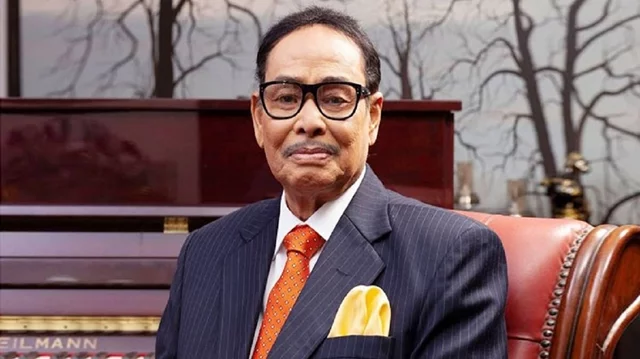
 Hussain Muhammad Ershad: Bangladesh’s Military President
Soldier, president, kingmaker — the story of a leader who refuses to fit into a single definition of Bangladesh’s political history.
| Took power | March 1982, via military coup |
|---|---|
| President of Bangladesh | 1983–1990 |
| Political party founded | Jatiya Party |
| Left office | Resigned December 1990 after mass protests |
| Later known as | A political “kingmaker” in coalition politics |
Hussain Muhammad Ershad was a military leader who became the President of Bangladesh after seizing power in a 1982 coup. He ruled the country through military-backed governance until 1990, introducing administrative reforms but also facing strong opposition for authoritarian rule. His political legacy remains controversial in Bangladesh’s history.
TL;DR
- Ershad ruled Bangladesh from 1983–1990 as President
- Came to power through a military coup in 1982
- Founded the Jatiya Party to legitimize political rule
- Introduced administrative and decentralization reforms
- Faced mass protests leading to resignation in 1990
- Remained influential in post-presidency politics
Why Ershad Still Matters in Bangladesh Politics
In the political memory of Bangladesh, few names trigger as much debate as Hussain Muhammad Ershad. Even decades after his rule ended, his influence still echoes through parliamentary alliances, party politics, and institutional reforms.
Ershad was not just a president — he was a military ruler, a political strategist, and later a kingmaker in Bangladesh’s democratic era. That combination is exactly why his story refuses to fade. Students, researchers, and political analysts still struggle to define him in simple terms: reformer, authoritarian leader, or survivor of a turbulent political evolution? The answer sits somewhere in between.
The Early Life of Hussain Muhammad Ershad
Before entering the political spotlight, Ershad built his foundation in the military. He joined the Pakistan Army before Bangladesh’s independence and later served in the Bangladesh Army after 1971. Like many military officers of his generation, his worldview was shaped by discipline, hierarchy, and strategic control — a background that later influenced how he governed the country.
A detail often missed: Ershad was not originally seen as a political figure. He was considered a quiet, calculated military officer who stayed behind the scenes until history pushed him forward.
The 1982 Coup: How Ershad Took Control of Bangladesh
Everything changed in 1982. At the time, Bangladesh was experiencing political instability, economic pressure, and rising dissatisfaction with civilian leadership. In March 1982, Ershad led a military takeover, removing the elected government, declaring martial law, and positioning himself as Chief Martial Law Administrator.
This was not an unusual pattern in South Asian politics during that era — military interventions occurred in multiple countries. But in Bangladesh, this moment marked a turning point, shifting governance from fragile civilian control to military-backed authority.
Becoming President of Bangladesh
By 1983, Ershad transitioned from military ruler to President of Bangladesh. Instead of ruling purely through military command, he began building political legitimacy, forming the Jatiya Party as the platform for his governance.
He didn’t just rule — he built institutions around his rule, attempting to transform his military regime into a political system that could survive elections and civilian scrutiny. Critics saw it differently: to them, it was authoritarianism wearing democratic clothing.
Governance and Reforms Under Ershad
Despite controversy, Ershad’s rule was not without administrative changes.
Reform Highlights
- Decentralization of administration
- Introduction of the upazila (sub-district) system
- Expansion of rural development programs
- Infrastructure development initiatives
- Attempts at modernizing public services
The Tension
These reforms had real impact, especially in rural Bangladesh, where governance was often weak and centralized. But reform and repression existed side by side — while development projects expanded, political opposition was often restricted, media freedom was limited, and protests were frequently controlled.
This contradiction defines much of Ershad’s legacy.
Opposition and Mass Movement Against Ershad
By the late 1980s, resistance against Ershad’s rule had grown significantly. Political parties, student groups, and civil society organizations united in demanding democratic restoration. Dhaka became the center of massive protests — strikes, rallies, and nationwide shutdowns became common.
Resignation in 1990: The Fall of a Military President
In December 1990, after years of protests and mounting pressure, Ershad resigned from the presidency. This marked the end of military rule in Bangladesh and the beginning of a restored parliamentary democracy.
It wasn’t a quiet exit — it was the result of sustained public pressure and political alignment against authoritarian governance. His resignation is still considered one of the most important democratic transitions in Bangladesh’s modern history.
Post-Presidency Politics: The Kingmaker Phase
Many political leaders fade after leaving power. Ershad did not. After his resignation, he remained active in politics through the Jatiya Party, which continued to play a role in parliamentary coalitions. At different times, his party aligned with both major political blocs in Bangladesh, giving him the reputation of a “kingmaker” — someone who could influence power dynamics without holding executive office.
This phase of his life shows something important: political influence doesn’t always end with formal authority.
Controversies Surrounding Ershad
Ershad’s legacy is deeply debated.
Critics Highlight
- Military takeover of a democratic system
- Restrictions on political freedom
- Allegations of corruption during his rule
- Suppression of opposition movements
Supporters Argue
- Infrastructure development during his tenure
- Administrative decentralization reforms
- Political stability during a volatile period
The truth is layered — Ershad cannot be placed neatly into a single category of “good” or “bad.” His rule represents the complexity of transitional political systems in developing democracies.
Hussain Muhammad Ershad in Modern Bangladesh Politics
Even after his death, Ershad’s political influence still exists indirectly. The Jatiya Party continues to participate in national elections and parliamentary alliances, and his name still appears in political discussions, especially when analyzing coalition strategies.
Remembered As
A military ruler who became a politician.
Also Remembered As
A reformer with authoritarian tendencies, and a symbol of transitional governance.
This multi-dimensional identity is why scholars still study him today.
The Historical Impact of Ershad’s Rule
To understand Ershad’s place in Bangladesh, it helps to look beyond emotion and into structure. His rule contributed to strengthening rural administrative systems, creating a political precedent for military-to-civilian transitions, shaping coalition-based politics, and influencing modern governance debates.
But it also raised long-term questions that still matter today: How much power should military institutions have in civilian politics? Can reforms justify authoritarian rule? What defines democratic legitimacy?
Lessons from Ershad’s Political Journey
- Power is temporary, influence can last longer
- Reforms do not erase political controversy
- Public resistance can reshape national direction
- Political legacy is always multi-layered
Ershad’s journey is a reminder that leadership is rarely simple in real-world governance.
Final Reflection: A Complex Figure in Bangladesh History
Hussain Muhammad Ershad remains one of the most debated figures in Bangladesh politics. To some, he represents authoritarian control. To others, administrative modernization. To historians, he is a case study in political transition.
And maybe that’s the most honest way to describe him — not as a single definition, but as a chapter in Bangladesh’s evolving democratic story.
Frequently Asked Questions
Who was Hussain Muhammad Ershad?
He was a military ruler who became the President of Bangladesh after taking power in 1982 and ruled until 1990.
How did Ershad come to power?
He came to power through a military coup that overthrew the existing civilian government.
What political party did Ershad create?
He founded the Jatiya Party to establish a political base during his rule.
Why did Ershad resign in 1990?
He resigned due to mass protests and political pressure demanding the restoration of democracy.
What is Ershad’s legacy in Bangladesh?
His legacy is mixed, involving both administrative reforms and accusations of authoritarian rule.
Contact
For more political history, biography, and current-affairs explainers, join the community at MOEJJA.
- LocationKhulna, Bangladesh
- Websitemahadi.moejja.com
- Platformmoejja.com
- WhatsAppMessage on WhatsApp