 Written by
 Islamic Relief: History, Global Programs, and How to Get Involved
From a small student-led effort in Birmingham to operations in 40+ countries — here’s what Islamic Relief actually does, and how it stays accountable.
| Founded | 1984, by students in Birmingham, UK |
|---|---|
| Reach | 40+ countries across Africa, Asia, the Middle East, and Europe |
| Focus areas | Emergency relief, development, WASH, orphan support, Zakat distribution |
| Core principle | Aid delivered by need alone, with neutrality in conflict zones |
| Key partners | UNICEF, UNHCR, WFP, WHO, and local governments |
Understanding Islamic Relief
Islamic Relief is a global humanitarian organization inspired by Islamic values of compassion and service, operating on the belief that every person — regardless of faith or background — deserves safety, dignity, and opportunity. Its teams are often among the first to arrive in a disaster zone and the last to leave.
Operations follow a decentralized model: headquarters sets strategic direction, but local teams who understand the cultural and economic realities of their communities carry out the work, backed by disaster preparedness training and pre-positioned emergency supplies.
History
Founded in 1984 by university students in Birmingham, UK, Islamic Relief began with grassroots fundraising and its first major project supporting famine relief in East Africa. By the 1990s it had offices across Africa, Asia, the Middle East, and Europe, responding to crises like the Bosnian War and the Sudan famine.
Today it operates in more than 40 countries — a growth story built on public trust, international partnerships, and a consistent commitment to neutrality and professionalism.
Core Mission
The mission centers on alleviating suffering and empowering vulnerable communities to live with dignity — addressing physical, emotional, social, and spiritual needs together rather than treating aid as a single transaction. Services are open to everyone regardless of religion, ethnicity, gender, or nationality.
Neutrality and impartiality are core to how the organization operates in conflict zones — aid is delivered based on need, not political alignment, which often allows access to communities other organizations can’t reach.
Emergency Relief
Preparedness happens long before a crisis: trained local teams and strategically stored supplies let Islamic Relief respond within hours of an earthquake, flood, or conflict, prioritizing food, clean water, medical aid, and shelter for children, women, the elderly, and people with disabilities first.
In conflict zones like Syria, Yemen, Gaza, and Afghanistan, established neutrality allows access other organizations struggle to get — and the response doesn’t end once headlines fade; teams stay to help rebuild homes and restore livelihoods.
Long-Term Development
Education is a central pillar — schools, scholarships, and teacher training, with particular focus on girls’ education in communities where they’re most often excluded. Healthcare development includes medical clinics, vaccination campaigns, and maternal health support that reduces preventable deaths.
Community development rounds this out with vocational training, sustainable agriculture instruction, and women’s empowerment programs offering business training and microfinancing — aimed at self-reliance rather than repeat aid.
Water, Sanitation & Hygiene
Wells, hand pumps, and solar-powered water systems bring safe water directly into villages that once relied on contaminated rivers — cutting waterborne disease and freeing children, especially girls, from hours of daily water collection. Sanitation facilities in schools and camps protect dignity and help keep girls from dropping out.
Hygiene education — handwashing, food safety, menstrual hygiene — closes the loop, paired with distributed hygiene kits for families who can’t regularly afford soap or sanitary products.
Orphan Support
The Orphan Sponsorship Program provides consistent monthly or yearly support covering food, school fees, healthcare, and emotional care — built as an ongoing relationship rather than a one-time gesture. Wherever possible, support strengthens existing family structures instead of separating children from familiar caregivers.
Counseling, safe play spaces, and community activities address the emotional and psychological side of loss, alongside broader efforts like school-building and advocacy for children’s rights.
Food Security & Livelihoods
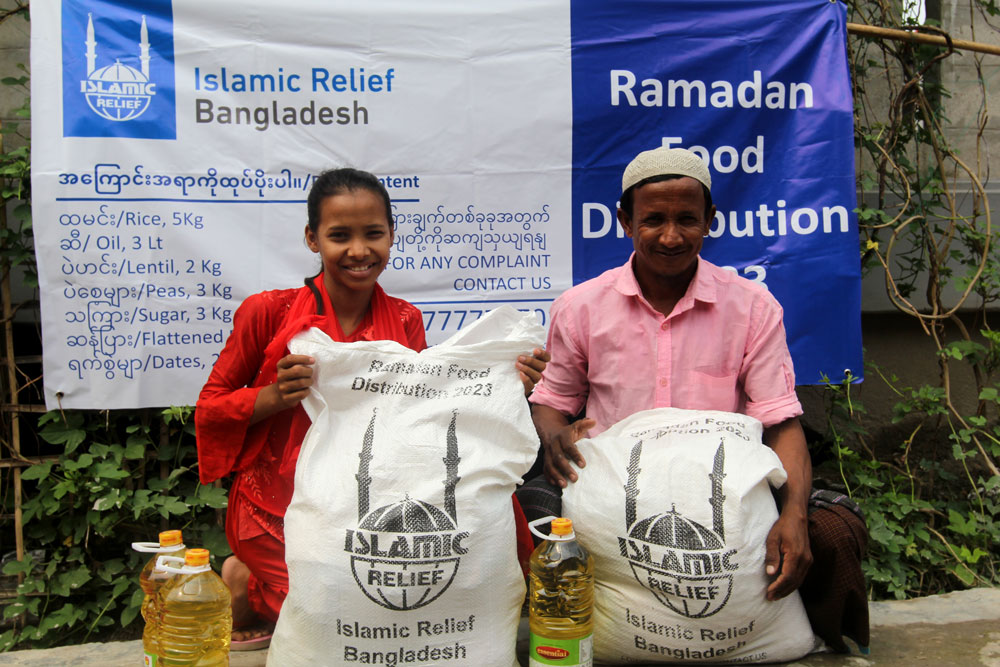
Emergency food distribution — rice, flour, oil, lentils — expands sharply during Ramadan and Qurbani, but the longer-term strategy focuses on helping families produce their own food: seeds, livestock, tools, and training in sustainable, climate-adapted agriculture.
In urban areas, vocational training in tailoring, carpentry, and digital skills, paired with microfinance and small grants, helps people start businesses that generate steady income rather than one-off relief.
Sustainability
Solar-powered wells and eco-friendly schools reduce environmental impact while keeping communities resilient to fuel costs. Climate-resilient agriculture programs teach drought-resistant crops and water-efficient irrigation, while disaster risk reduction work — early warning systems, flood-resistant infrastructure — prepares communities before disaster strikes rather than only responding after.
Zakat & Sadaqah
Islamic Relief maintains a globally recognized Zakat distribution framework, carefully allocating funds to eligible recipients for food, water, healthcare, education, and emergency aid. Sadaqah, being unrestricted, allows faster and more flexible response to needs as they arise — rebuilding homes, funding medical care, supporting orphans.
During Ramadan and Qurbani, these programs reach their peak, delivering food packs and Qurbani meat to millions of families, backed by financial audits and detailed donor reporting year-round.
Global Partnerships
Collaboration with UN bodies — UNICEF, UNHCR, WFP, WHO — aligns interventions with international standards and the Sustainable Development Goals, while national governments often trust Islamic Relief for access to conflict zones and politically unstable regions other groups struggle to reach.
Local grassroots partnerships keep programs culturally appropriate, drawing on community knowledge that headquarters alone couldn’t provide.
Impact Stories
Amina — East Africa
Once walked 10 miles daily for water; a new solar-powered well let her children return to school and start home gardens.
Youssef — Gaza
Trauma counseling and child-friendly spaces helped a young boy move from anxiety to drawing colorful scenes of family and nature again.
Farzana — Pakistan
A sewing machine and business training turned into a tailoring service that now supports her children’s education.
How to Get Involved
1Donate
Zakat, Sadaqah, or one-time gifts — with full transparency on how each contribution is used.
2Volunteer
Community events, fundraising campaigns, packing food parcels, or advocacy work.
3Fundraise
Host a local event, charity run, or online campaign — often through schools, mosques, or community centers.
4Advocate
Share information and raise awareness to amplify the voices of communities facing injustice.
The Bottom Line
Islamic Relief blends faith-driven compassion with modern humanitarian standards — combining rapid emergency response with long-term development that aims for self-reliance, not repeat dependency. Its growth from a student-led campaign to operations in 40+ countries reflects decades of consistent, transparent service.
Frequently Asked Questions
What makes Islamic Relief different from other charities?
Islamic Relief stands out for its faith-driven values, high transparency, global reach, and focus on both emergency relief and long-term sustainable development. It serves all people regardless of religion or background.
Is Islamic Relief only for Muslims?
No. Islamic Relief helps anyone in need. While inspired by Islamic principles, its humanitarian services are universal and benefit people of all faiths and communities.
How does Islamic Relief ensure my donation is used properly?
The organization provides detailed reports, third-party audits, and transparent financial breakdowns. Every donation is tracked and used according to strict accountability standards.
Can I volunteer with Islamic Relief?
Yes. Islamic Relief offers numerous volunteer opportunities, from local events to fundraising campaigns. Volunteers play a key role in amplifying the organization’s impact.
What types of programs does Islamic Relief fund?
From clean water systems and orphan support to emergency relief, healthcare, education, climate resilience, and livelihood programs, Islamic Relief funds a wide range of transformative humanitarian projects.
Contact
Available for contract work involving WordPress development, SEO/AEO, and digital marketing.
- LocationKhulna, Bangladesh
- Websitemahadi.moejja.com
- Platformmoejja.com
- WhatsAppMessage on WhatsApp