 Written by
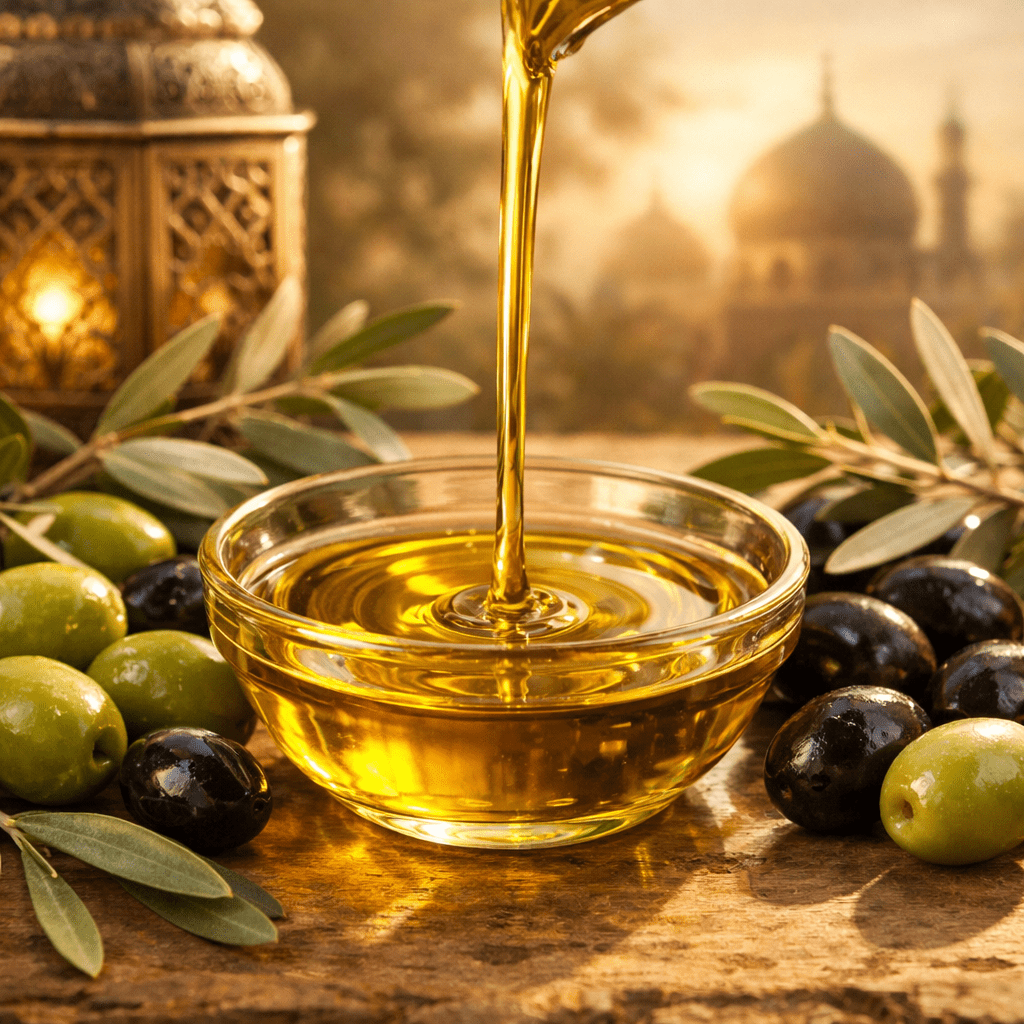
 Olive Oil in Islam: A Sacred Gift from Allah
A golden oil mentioned in the Qur’an, recommended by the Prophet ﷺ, and now praised by modern science — olive oil sits at the meeting point of faith and health.
| Qur’anic mentions | An-Nur, At-Tin, Al-An’am, An-Nahl |
|---|---|
| Prophetic guidance | Eat it, and apply it to hair and skin (Tirmidhi) |
| Arabic term | Mubarak — blessed, increasing in goodness |
| Best grade | Extra virgin, cold-pressed, in dark glass |
| Key benefit | Heart health via monounsaturated fats and polyphenols |
Olive oil is not just another cooking ingredient in Islam — it is something Allah Himself mentions in the Qur’an, describing it as coming from a blessed tree. For centuries, Muslims have used it in the kitchen and in daily self-care, following a lifestyle the Prophet ﷺ himself practiced.
The Mention of Olive Oil in the Qur’an
Certain foods carry a special status in Islamic tradition — dates, honey, milk, and olive oil among them. Olive oil is described as coming from a blessed tree, using the Arabic word mubarak, which carries meaning far beyond “good” — it signals increase and divine favor.
The Blessed Tree in Surah An-Nur
One of the most striking references appears in Surah An-Nur (24:35), the “Verse of Light.” Allah uses the example of a lamp fueled by oil from a blessed olive tree — “neither of the east nor of the west” — so pure it would almost glow untouched by fire.
Guidance
Just as oil fuels a lamp, revelation fuels the heart — pure and free from distortion.
Universality
“Neither east nor west” is read as a tree exposed to sunlight all day — guidance meant for everyone.
Light in Islam represents guidance, faith, and knowledge, while darkness represents ignorance. Oil that “almost glows” reflects the natural disposition of a believer whose heart, when pure, is already inclined toward truth.
Olives in Other Qur’anic Verses
1Surah At-Tin — A Divine Oath
Allah opens the chapter swearing “by the fig and the olive.” An oath in the Qur’an is never casual — it elevates the status of what’s named. A single olive tree can live for centuries, surviving harsh climates while continuing to bear fruit.
2Surah Al-An’am & Surah An-Nahl
Olives appear repeatedly alongside gardens, dates, and grapes as agricultural blessings sent through rain — sustenance tied directly to divine mercy.
Prophetic Traditions About Olive Oil
Eating It
The Prophet ﷺ said: “Eat olive oil and use it on your hair and skin, for it comes from a blessed tree” (Tirmidhi) — connecting it directly to blessing, for both internal and external use.
Applying It
In a dry, harsh climate, olive oil served as a pure, accessible moisturizer — softening skin and strengthening hair as part of Islamic self-care and dignity.
Why Olive Oil Is Called Mubarak
Mubarak means something that carries continuous goodness — a small amount bringing a large benefit. Olive oil is layered in blessing: mentioned by Allah in the Qur’an, recommended by the Prophet ﷺ, and offering both spiritual symbolism and physical benefit at once.
Some olive trees in Palestine are over a thousand years old and still bear fruit — surviving droughts and hardship while continuing to give. That endurance is, in itself, what blessing looks like.
Spiritual Benefits of Olive Oil in Islam
Consuming olive oil with awareness can become a quiet spiritual act — a reminder of Allah’s provision, of revelation, and of the Prophet’s ﷺ own lifestyle. In a world pushing complexity, olive oil’s humility mirrors sincere, small, and consistent deeds.
Reflecting on how olives grow — rain, soil, sunlight, human effort — builds gratitude. And gratitude builds humility, which in turn builds faith.
Olive Oil and Sunnah Lifestyle
The Prophet ﷺ lived simply and practically — olive oil fits seamlessly into that framework of moderation and natural living.
1In Meals
Dip bread in it, drizzle over salads, or use it as a primary cooking oil instead of heavily refined alternatives.
2On the Body
A small, gentle amount applied to skin or hair — self-care without extravagance.
Intention transforms habit into worship. Consumed as Sunnah, even a spoonful of olive oil carries reward beyond nutrition.
Physical Health Benefits of Olive Oil
Modern research continues to confirm what Islamic tradition has appreciated for centuries. Extra virgin olive oil is rich in monounsaturated fats, particularly oleic acid, along with antioxidants like vitamin E and polyphenols.
Heart Health
Helps maintain healthy cholesterol balance while polyphenols reduce chronic inflammation linked to cardiovascular disease.
Immunity & Inflammation
Oleocanthal offers natural anti-inflammatory support, while antioxidants neutralize free radicals from daily wear and tear.
Digestion
Encourages bile production, helping the body break down fats and absorb nutrients more efficiently.
Longevity
A central pillar of the Mediterranean diet, consistently linked to lower rates of cardiovascular disease.
Benefits for Skin and Hair
Long before commercial skincare existed, olive oil protected skin from harsh climates. Its vitamin E and healthy fats help lock in moisture and create a protective barrier against water loss.
For hair, a small massage into the scalp can help with dryness and add shine — grooming that the Prophet ﷺ himself encouraged as part of Islamic self-respect.
Olive Oil in Islamic Medicine (Tibb an-Nabawi)
Prophetic medicine treats the body as an amanah — a trust from Allah — and doesn’t separate nutrition from healing. Scholars of the Islamic Golden Age documented olive oil’s benefits for digestion, skin, and general vitality, treating it as both food and medicine.
Choosing the Best Olive Oil
Look for extra virgin olive oil (EVOO) — the least processed grade, retaining the most antioxidants. Check the harvest date rather than just the expiration date, and favor dark glass or tin packaging, since light degrades the oil over time.
| Label | Extra Virgin vs. Pure/Light/Refined |
|---|---|
| Packaging | Dark glass or tin vs. clear plastic |
| Extraction | Cold-pressed vs. chemically refined |
| Flavor | Rich, slightly peppery vs. neutral or flat |
A slightly peppery or bitter finish is a good sign — it usually indicates the presence of healthy polyphenols.
Olive Oil in Muslim Culture and History
From Andalusia to Jerusalem, olive trees have shaped economies, traditions, and daily life across Muslim-majority regions. Harvest season becomes a community event — families gathering, children climbing trees, elders sharing stories.
Olive oil once fueled the lamps of masjids, making the symbolism of Surah An-Nur tangible in everyday worship. In Palestine, centuries-old olive trees continue to represent resilience and steadfastness (sabr).
Common Misconceptions About Olive Oil
1“It can’t be used for cooking”
Extra virgin olive oil is stable for moderate-heat cooking — its antioxidants help protect it from breaking down quickly.
2“All olive oils offer the same benefits”
Refined oils lose many antioxidants in processing; extra virgin retains the most health-promoting properties.
3“More is always better”
Healthy fats are still fats — Islam consistently promotes moderation, even with beneficial foods.
4“It’s only good for adults”
Used appropriately, it can benefit the whole family as part of a balanced diet.
The Bottom Line
Olive oil in Islam is far more than a kitchen staple — a symbol of light, blessing, resilience, and balance. Its golden glow recalls divine guidance, and its steady benefits reflect barakah: small amounts bringing lasting good. Sometimes the most profound blessings sit quietly on the shelf, waiting to nourish both body and soul.
Frequently Asked Questions
Is olive oil mentioned directly in the Qur’an?
Yes, olives and olive oil are mentioned in multiple verses of the Qur’an, including Surah An-Nur, Surah At-Tin, Surah Al-An’am, and Surah An-Nahl. They are described as blessed and used in powerful spiritual metaphors.
What did the Prophet Muhammad ﷺ say about olive oil?
The Prophet ﷺ encouraged eating olive oil and applying it to the hair and skin, stating that it comes from a blessed tree.
Is extra virgin olive oil better than regular olive oil?
Yes. Extra virgin olive oil is less processed and retains more antioxidants and beneficial nutrients compared to refined varieties.
Can olive oil really improve heart health?
Research suggests that olive oil, particularly extra virgin olive oil, supports heart health by improving cholesterol balance and reducing inflammation.
How can I follow the Sunnah using olive oil daily?
You can consume it in meals, apply it lightly to skin or hair, and maintain the intention of following Prophetic guidance in your daily routine.
Contact
Available for contract work involving WordPress development, SEO/AEO, and digital marketing.
- LocationKhulna, Bangladesh
- Websitemahadi.moejja.com
- Platformmoejja.com
- WhatsAppMessage on WhatsApp