 Written by
 King Faisal: Islamic Unity, the OIC, and the 1973 Oil Embargo
A monarch who paired deep religious conviction with global diplomacy — and helped prove that oil could move world politics.
| Full name | Faisal bin Abdulaziz Al Saud |
|---|---|
| Born | 1906 |
| Reign | 1964–1975 |
| Country | Saudi Arabia |
| Major focus | Islamic unity, modernization, foreign policy |
| Died | Assassinated, March 25, 1975 |
Who He Was
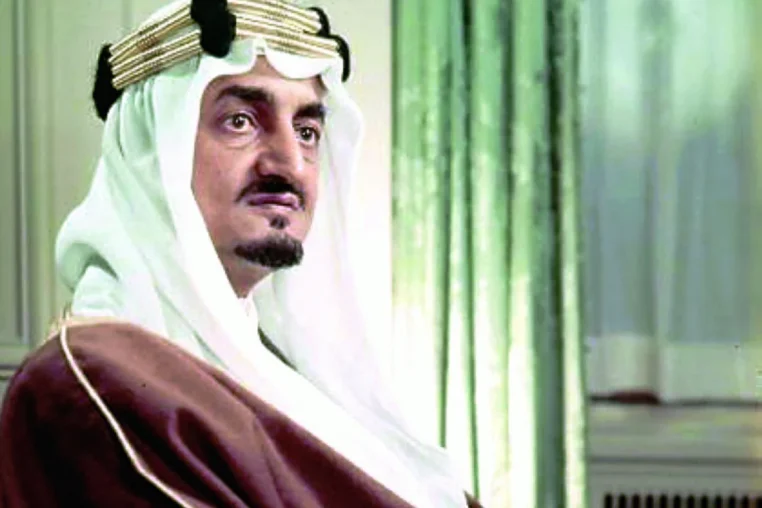
King Faisal bin Abdulaziz Al Saud was born in 1906 and became King of Saudi Arabia in 1964, succeeding his brother King Saud. He represented Saudi Arabia abroad while still a teenager — early exposure that shaped a worldview combining deep religious conviction with a practical understanding of global politics, a combination fairly unusual among rulers of his era.
What Islamic Politics Means
Islamic politics refers to political systems, ideologies, and policies shaped by Islamic principles — questions about how Muslim societies should be governed, what role religion should play in government, and how Muslim nations can cooperate internationally. Faisal believed political leadership in Muslim societies should reflect Islamic ethics while still responding to modern challenges — a balance that defined much of his rule.
Muslim Unity & the OIC
Strengthening unity among Muslim countries was one of Faisal’s central goals — he believed division among Muslim states weakened their ability to defend shared interests, and intensified diplomatic efforts toward that goal after the 1967 Arab-Israeli War.
His most enduring achievement was supporting the creation of the Organization of Islamic Cooperation (OIC) in 1969, formed after an arson attack on Al-Aqsa Mosque in Jerusalem. Faisal argued Muslim nations needed a permanent international body to coordinate political, economic, and cultural cooperation — today the OIC includes dozens of member states and remains one of the world’s largest international organizations.
The Palestinian Cause
Faisal viewed the Palestinian issue as a broader Islamic responsibility, not simply an Arab one, consistently advocating Palestinian rights in international forums and describing Jerusalem as a sacred city whose status mattered to Muslims globally. Many historians credit him with helping internationalize the Palestinian issue within Muslim political discourse, strengthening solidarity across Muslim-majority countries in the process.
The 1973 Oil Embargo
During the 1973 Arab-Israeli War, Saudi Arabia and several Arab oil-producing countries, under Faisal’s leadership, imposed an oil embargo on nations supporting Israel. Oil prices surged worldwide and Western economies faced severe disruption — the global community suddenly recognized that energy resources could function as genuine political instruments.
Economic Influence
Muslim countries held significant leverage through natural resources.
Resources as Politics
Natural resources could directly affect international relations.
Interconnected Systems
Foreign policy and economics proved deeply linked.
Coordinated Action
Islamic solidarity could produce real, unified political outcomes.
Modernization & Education
Despite his religious convictions, Faisal supported extensive modernization — expanding education, healthcare, transportation infrastructure, government institutions, and economic development. Notably, he backed girls’ education at a time when it was genuinely controversial, believing modernization and Islamic values were compatible rather than opposed.
Universities expanded, schools multiplied, and scholarship programs sent Saudi students abroad — reforms Faisal saw as feeding directly into administrative modernization, economic diversification, and Saudi Arabia’s capacity to participate in global affairs.
Foreign Policy
Middle East
Sought stronger cooperation among Arab states despite ideological differences.
Africa
Expanded relations with newly independent countries with large Muslim populations.
Asia
Cultivated ties with Pakistan, Malaysia, Indonesia, and other Muslim-majority states.
International Bodies
Grew increasingly influential within the UN and other global institutions.
Criticisms & Challenges
Critics point to limited political participation, highly centralized decision-making, restrictions on opposition movements, and social tensions generated by rapid modernization. Balancing modernization with traditional values proved genuinely difficult — a reminder that understanding his rule requires weighing both achievements and limitations rather than settling for simple admiration or condemnation.
Assassination & Impact
King Faisal was assassinated on March 25, 1975, a shock that reverberated across Saudi Arabia and much of the Muslim world. Many feared his vision for Islamic cooperation would weaken without him — and while Saudi Arabia continued many of his policies, historians generally agree his personal charisma and diplomatic leadership were difficult to replace, marking the end of a significant era in Middle Eastern politics.
The Bottom Line
King Faisal’s legacy sits at the intersection of religious conviction and pragmatic diplomacy — the OIC, the internationalization of the Palestinian cause, and the 1973 oil embargo all trace back to his leadership. Decades later, scholars still debate whether his vision of Islamic unity could have reshaped the Muslim world’s political landscape further, had it continued unbroken.
Frequently Asked Questions
Was King Faisal an Islamic reformer?
Yes. While committed to Islamic principles, Faisal introduced educational, economic, and administrative reforms intended to modernize Saudi Arabia.
Why is King Faisal important in Islamic politics?
He promoted Muslim unity, supported the Palestinian cause, strengthened Islamic institutions, and demonstrated the geopolitical power of oil.
What organization did King Faisal help establish?
King Faisal strongly supported the creation of the Organization of Islamic Cooperation (OIC) in 1969.
Did King Faisal support modernization?
Yes. He encouraged modernization in education, healthcare, infrastructure, and administration while emphasizing Islamic values.
What was King Faisal’s greatest political achievement?
Many historians consider his efforts toward Muslim unity and his leadership during the 1973 oil embargo among his greatest achievements.
Contact
Available for contract work involving WordPress development, SEO/AEO, and digital marketing.
- LocationKhulna, Bangladesh
- Websitemahadi.moejja.com
- Platformmoejja.com
- WhatsAppMessage on WhatsApp