 Written by
 Sheikh Mujibur Rahman: The Founding Leader of Bangladesh
Student activist, political prisoner, national founder — how one man’s speech at Racecourse Ground helped bring a country into being.
| Born | March 17, 1920, in Tungipara, Gopalganj |
|---|---|
| Known as | Bangabandhu — “Friend of Bengal” |
| Key milestone | The Six-Point Movement, 1966 |
| Defining speech | 7 March 1971, Racecourse Ground, Dhaka |
| Roles held | First President, later Prime Minister of Bangladesh |
Sheikh Mujibur Rahman, widely known as Bangabandhu (“Friend of Bengal”), was the founding leader of Bangladesh and a central figure in the country’s independence movement. His leadership during the struggle against Pakistani rule helped shape modern Bangladesh, making him one of the most influential figures in Bangladesh politics and history.
TL;DR
- Regarded as the Father of the Nation of Bangladesh
- Led the political movement that culminated in Bangladesh’s independence in 1971
- His Six-Point Movement became the foundation of Bengali self-determination
- Served as the first President and later Prime Minister of Bangladesh
- His books and speeches remain influential in understanding Bangladesh politics
Why Sheikh Mujibur Rahman Still Matters Today
Few political leaders leave a legacy that continues to shape a nation decades after their death. Sheikh Mujibur Rahman is one of those rare figures. Whether you study Bangladesh politics, South Asian history, or modern independence movements, his story remains impossible to ignore.
Walk through Dhaka today and you’ll find his image in government buildings, educational institutions, museums, and political gatherings. His influence extends far beyond politics — it touches national identity itself.
Early Life and Education
Sheikh Mujibur Rahman was born on March 17, 1920, in Tungipara, Gopalganj, in what was then British India. From a young age, he displayed leadership qualities — teachers and classmates often noted his willingness to speak up against injustice. He later studied at the University of Dhaka, where his political awareness grew significantly.
Many future leaders discover politics through textbooks. Mujib discovered it through experience — during his student years, he witnessed social inequality, economic discrimination, and political marginalization of Bengalis, experiences that shaped the convictions that would later define his career.
Entry into Politics
Mujib became involved with the Awami League and gradually emerged as one of the most influential Bengali leaders in Pakistan. His political message was simple: Bengalis deserved equal rights, fair economic treatment, and democratic representation. That message resonated deeply across East Pakistan.
The Six-Point Movement
If there is one political milestone that changed the future of Bangladesh, it was the Six-Point Movement of 1966. The movement demanded greater autonomy for East Pakistan and challenged the centralized control exercised by West Pakistan.
The Agartala Conspiracy Case
The Pakistani government attempted to suppress Bengali nationalism by accusing Mujib of conspiracy against the state. Instead of weakening him, the trial increased public support. People began referring to him as “Bangabandhu” — Friend of Bengal — a title that would remain with him forever.
The Historic 7 March Speech
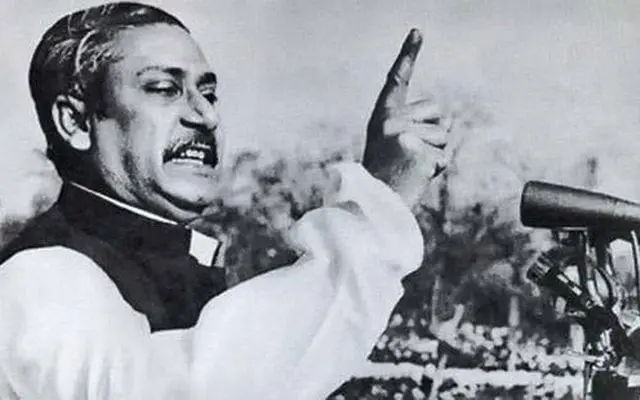
One of the most important moments in South Asian political history occurred on March 7, 1971. Before a massive crowd at the Racecourse Ground in Dhaka, Mujib delivered a speech that inspired millions. Although he did not formally declare independence that day, his words effectively prepared the nation for resistance — the speech remains one of the most celebrated political speeches ever delivered.
Sheikh Mujibur Rahman and the Bangladesh Liberation War
Following political tensions and military actions by Pakistan, the Bangladesh Liberation War began in 1971. Mujib was arrested and imprisoned in West Pakistan. Despite his absence, his leadership and vision continued to inspire the independence movement. After a nine-month war, Bangladesh emerged as an independent nation.
Leadership After Independence
Winning independence was only the beginning. The new country faced significant challenges:
| Challenge | Impact |
|---|---|
| Economic devastation | Infrastructure damage |
| Refugee crisis | Millions displaced |
| Food shortages | National hardship |
| Administrative vacuum | Governance difficulties |
Mujib’s government focused on reconstruction and institution-building.
Supporters Credit Him With
- Establishing foundational state institutions
- Promoting secularism
- Expanding international recognition of Bangladesh
- Rebuilding after war
Critics Point To
- Economic difficulties
- Governance challenges
- Political centralization
Understanding Sheikh Mujibur Rahman requires acknowledging both accomplishments and controversies.
Personal and Family Life
Despite his political prominence, Mujib maintained a relatively simple lifestyle compared with many global leaders. He remained closely connected to ordinary people and often preferred direct engagement over ceremonial distance. Friends and colleagues frequently described him as charismatic, approachable, and emotionally invested in the struggles of common citizens.
His family played an important role in his personal journey. Among his children is Sheikh Hasina, who later became one of the most influential political leaders in Bangladesh.
Sheikh Mujibur Rahman’s Books
Several books provide valuable insights into his life and political thinking.
The Unfinished Memoirs
Perhaps his most famous work, this memoir offers a personal account of his childhood, political awakening, and early struggles.
Prison Diaries
This collection reveals his experiences during imprisonment and provides insight into his political philosophy.
Amar Dekha Naya Chin
A travel-based narrative documenting his observations of China.
These books offer more than historical records — they provide first-hand perspectives on Bengali nationalism, political activism, state-building, and leadership under adversity. For students of Bangladesh politics, they remain essential reading.
Sheikh Mujibur Rahman’s Legacy
Nearly every major political discussion in Bangladesh eventually references Mujib’s legacy. His influence can be seen in constitutional debates, national identity discussions, political party narratives, and historical education. Whether viewed through admiration or criticism, his role remains central.
His March 7 speech has received international recognition and continues to be studied as an example of transformational leadership. His story also serves as a case study in anti-colonial movements and national liberation struggles worldwide.
A Real Historical Reflection
Ask different generations in Bangladesh about Sheikh Mujibur Rahman and you’ll often hear different stories. Some remember him as the leader who gave them a country. Others focus on the difficulties of governing after independence.
What remains consistent is this: his influence is impossible to separate from the story of Bangladesh itself.
Conclusion
Sheikh Mujibur Rahman’s story is inseparable from the story of Bangladesh. From student activist to national leader, from political prisoner to founding father, his journey transformed the destiny of millions. History rarely produces figures who redefine an entire nation. Bangabandhu Sheikh Mujibur Rahman was one of them.
Frequently Asked Questions
Why is Sheikh Mujibur Rahman called Bangabandhu?
He earned the title “Bangabandhu,” meaning Friend of Bengal, because of his leadership in advocating for Bengali rights and self-determination.
What was Sheikh Mujibur Rahman’s role in Bangladesh independence?
He led the political movement that inspired and guided Bangladesh’s struggle for independence from Pakistan in 1971.
Which book by Sheikh Mujibur Rahman should I read first?
Most readers start with The Unfinished Memoirs because it provides a personal and historical overview of his life.
What was the Six-Point Movement?
It was a political program introduced in 1966 seeking greater autonomy for East Pakistan, and it became a foundation for Bangladesh’s independence movement.
How did Sheikh Mujibur Rahman influence Bangladesh politics?
His ideas on democracy, nationalism, and Bengali identity continue to shape political discourse in Bangladesh today.
Contact
For more political history, biography, and current-affairs explainers, join the community at MOEJJA.
- LocationKhulna, Bangladesh
- Websitemahadi.moejja.com
- Platformmoejja.com
- WhatsAppMessage on WhatsApp